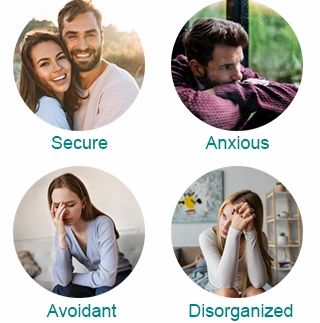
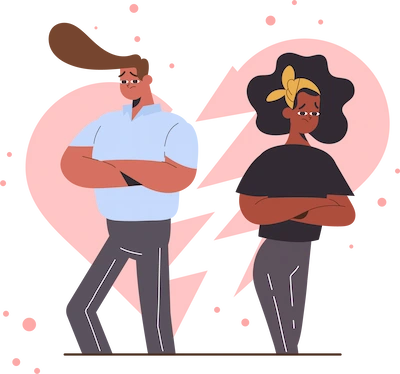
If you’ve ever felt like you’re too much or not enough in your relationships, you’re not alone. Insecure attachment — characterized by fear of rejection, anxiety, or emotional distance — can make navigating close relationships feel like crossing a rickety bridge. Add to that the experience of being part of a diaspora, and that bridge can feel like it’s swaying over a canyon of cultural misunderstandings and political tension.
Attachment styles form early in life, often shaped by caregivers. But what happens when your roots are in one culture and your reality is in another? When societal or political messages in the U.S. question your safety, your values, or your belonging? The result can be a heightened sense of insecurity in relationships — even those that are meant to feel safe.
It’s normal to feel this way when the larger culture around you is sending mixed signals. You might ask yourself: Am I accepted here? Is my community safe? Will I ever feel at home? These questions reflect both personal and collective anxieties.
The good news is that attachment styles aren’t fixed. They can evolve through self-awareness, therapy, and community. Here are a few ways to start:
- Ground yourself in safe relationships: Identify the people in your life who feel secure. Maybe it’s a friend who listens without judgment or a family member who shows up reliably. Nurture those connections — they’re lifelines when uncertainty looms.
- Notice your patterns: Are you pulling away when things get too close? Or clinging when you fear abandonment? Self-awareness is the first step to change.
- Reflect on your intersectionality: Your experience isn’t just about attachment. It’s shaped by race, gender, privilege, and the sociopolitical climate. Acknowledge how these layers interact, and give yourself grace for the complexity of your experience.
- Create safety within yourself: Practices like mindfulness, somatic exercises, and therapy can help regulate your nervous system when relationships feel shaky.
In a world where moral, ethical, and political lines feel increasingly rigid, cultivating secure attachment — in ourselves and with each other — is a revolutionary act. Your search for belonging is valid. You aren’t alone on this map. And even if the bridge feels unsteady, you can still cross it, one step at a time.