
Calm
What Is Anxiety?
Does your experience of anxiety occur daily, or almost daily? Is it persistent, overwhelming, and seemingly uncontrollable? Does anxiety interfere with your daily activities, social life, or work? If so, you may be among the 40 million American adults with an anxiety disorder.
The prevalence of anxiety disorders in the United States typically hovers between 20% and 25% of adults, with women being impacted slightly more than men. However, researchers report that the prevalence of anxiety has increased 3-fold since the start of the COVID pandemic.

Calm
Anxiety is more than feeling nervous or overthinking situations. It’s a complex mental health condition that impacts people in distinct ways. For some it can feel like sudden, intense spikes of panic. For others, it can feel like an all-consuming, underlying sense of worry or dread.
Some of the most common manifestations of anxiety are:
Generalized Anxiety: Excessive daily worry about not just one, but many issues.
Specific Phobias: A paralyzing fear of specific things or situations such as spiders, crowds, driving, or enclosed spaces. Phobias arise from a “one time learning event”.
Panic Disorder: Feeling like you are having a heart attack, or can’t breathe.
Post-Traumatic Stress Disorder (PTSD): Intense, disturbing thoughts and feelings stemming from a traumatic experience that remain long after the event has ended.
Obsessive Compulsive Disorder (OCD): Often mis-referenced casually as equivalent to “perfectionism”, or “type A personality”, OCD is actually a very disruptive anxiety disorder wherein specific rituals are re-enacted repeatedly in an effort to reduce anxiety (e.g., “if I take exactly 60 steps to the door and then lock/unlock it exactly 10 times then I will be safe from intruders”).
Social Anxiety: An intense fear and avoidance of criticism or being embarrassed or humiliated even in everyday situations such as eating in public, making small talk, meeting new people, or being assertive.
We’ll help you understand these different manifestations of anxiety and identify how they may be impacting you.
It’s noteworthy that anxiety and depression often go hand in hand creating a self-sustaining negative spiral. In fact, roughly 60% of people with anxiety also suffer from depression, and vice versa. Learning to control your anxiety can be a step toward improving depressive symptoms as well.
Fortunately, anxiety is highly treatable, and there are many different approaches that can be combined to produce an excellent outcome. We will help you control your anxiety using a flexible, eclectic approach instead of letting your anxiety control you.
How We Will Help
We intentionally blend diverse methods across 12 sessions to equip you with tools for anxiety management, leveraging both your conscious and powerful unconscious minds. Our approach includes mindfulness, challenging thoughts, and discussing medication options, aiming to empower you for a balanced and effective recovery, fostering peace in your daily life.
Detailed Breakdown of the 12 Session Treatment
In this session, you will begin distinguishing between thoughts, emotions and behaviors and how they impact your anxiety reactions. You will learn about how your unconscious mind naturally processes your life experiences creating habitual patterns that keep you stuck. You’ll also learn the tools needed to replace those patterns with more effective coping strategies. By the end of the session, you will understand how your conscious and unconscious minds interact to create either an anxious or calm state: the choice can now be yours.
During this session, you will learn how to challenge anxious thoughts that in turn have an effect on your emotions, behavior and physiological responses. You will also be guided on how to wield the power of your unconscious mind by learning exactly how parts of your brain work in forming habitual thoughts and responses. Once you understand how these processes work, you can begin to re-shape how your mind and body relate to anxiety.
This session will improve your ability to connect with your bodily experiences of anxiety. We know that when we are anxious, our heart rate increases, our muscles tense up and our breathing becomes heavy. What is less known is that by using specific techniques, we can create a day to day practice where we teach our bodies to be calm and relaxed. Over time, we reverse the effect that anxiety has on our minds and bodies; and instead, develop the skill-set to regulate our own anxious thoughts.
During this session, you will learn how to identify core patterns and beliefs related to your anxiety. These patterns affect your day to day relationships with yourself, others and the world we live in. You will receive the tools you need to begin mapping the patterns of anxious thought when in a state of calm. Lastly, you will learn how anxiety shows up as control. In session 5, you will learn how to distinguish between the type of control that is helpful and the type that feeds the anxiety.
Today’s session is largely experiential where you’ll have the opportunity to experience the profound benefits of trance. The hypnotic experience will allow your conscious and unconscious minds to partner together to change your habits, thoughts, emotions, and behaviors. We’ll start with an overview of hypnotherapy and why it is so efficient. You’ll learn about “state”, changing states, and what to expect from the hypnotherapy session. Paul will answer any questions about the process, and then we will embark on a 40 minute shared hypnotherapy experience. We will debrief the hypnotherapy experience at the start of the next session.
On this day, after debriefing the hypnosis experience from last session, we’ll enter the exciting and powerful world of Neuro-Linguistic Programming (NLP), where you will quickly learn how your everyday language (both inside and outside of your head) interacts with your brain to encode memories and experiences. We’ll discuss ways that your language creates or eliminates barriers to your success, and how our senses and memories impact our perception of the world. You will learn some powerful protocols to alter or eliminate unhelpful emotions that keep you stuck, and replace them with more effective responses. Using all of your senses, you will learn how to stop responding to “triggers”, and replace them with equally powerful positive “anchors”. You will learn how to break unhelpful patterns and begin to manage your “state” moment by moment. This session is all about taking your power back! We’ll end with a mindfulness meditation.
On this day, the session will give us an opportunity to pause, reflect, and ensure that we are addressing your anxiety challenges in the most helpful way. Varsha and Paul will start by reviewing the themes we derive from the feedback forms provided in the previous session. We will reinforce learnings and interventions that participants identified as most meaningful or helpful, as well as revisiting any areas that you may have missed or require more clarification on. We will host a Questions & Answers session as a large group, with the flexibility to break into smaller groups if needed. We will end the session with a brief mindfulness activity.
In continuation of session five’s work, you will learn techniques on how to redefine the core beliefs that have kept the anxiety in that position of power over your life. The goal is not to get rid of anxiety, but to rewire the way in which we relate to it. Today’s training will provide you with the tools to feel like your anxiety is serving you versus controlling you.
Now that you have an understanding of NLP and the importance of linguistics, you will learn specific language patterns to empower you and broaden your perspective. We’ll lead some linguistics exercises, and help you identify the primary language patterns that keep you stuck. Then, you will learn how to tweak those habitual language patterns to break unhelpful cycles and build a more positive future. Clients report that these skills have drastically improved many areas of their lives, not just anxiety relief.
We will start by reviewing themes from the homework and the feedback received. Then, we’ll turn our attention to visualizing your “new normal” in the future. With anxiety gone or drastically reduced, what do you want to do with that extra energy and time? We’ll talk about remedial work vs enhancement, and how you can continue to enhance your happiness and overall well being. You’ll learn about the importance of Future Pacing, and how the amygdala in your brain makes that experience real. You’ll learn a simple trick to ensure that your Future Pacing enhances your motivation for positive change.
You have done the hard work and deserve to be celebrated. During this session, your therapists will lead a group celebration that highlights the journey of growth we have gone through together. You will also be guided on how to tackle the questions of ‘what next?’ and ‘what if it comes back?’ You will leave this group experience having developed a new understanding of and relationship to anxiety; one that presents the world’s opportunities in a whole new light.
Meet Your Facilitators
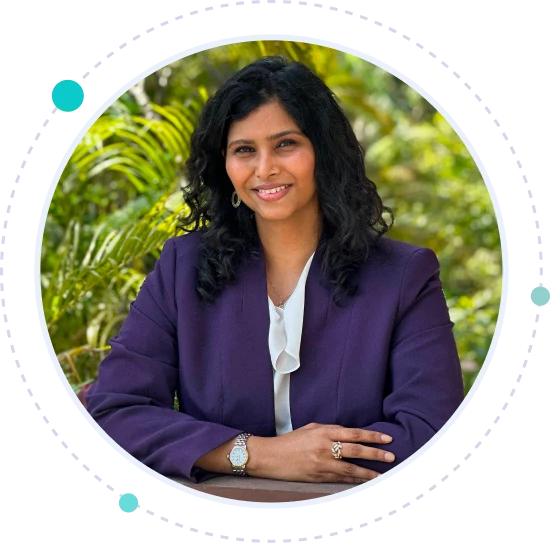
Varsha Swamy
Founder, Marriage and Family Therapist
Varsha Swamy – MS Applied Psychology and MS Marriage and Family Therapy- has a unique background that combines her dual master’s with a wide range of experiences from several parts of the United States and India. Varsha has spent the last 10 years working with individuals, couples and families across outpatient, private practice, organizational and workshop settings.
Varsha is skilled in working with couples and individuals that struggle with recognition and communication of their underlying emotions. She helps clients identify the parts of themselves that have mastered the art of distraction, denial and destruction in response to their traumatic past. However, insight into an issue is only one part of the healing process. Varsha partners with her clients to empower them with the tools they need to challenge unwanted patterns, to overcome dips in confidence and to show up as their most authentic selves in every space and relationship they occupy.
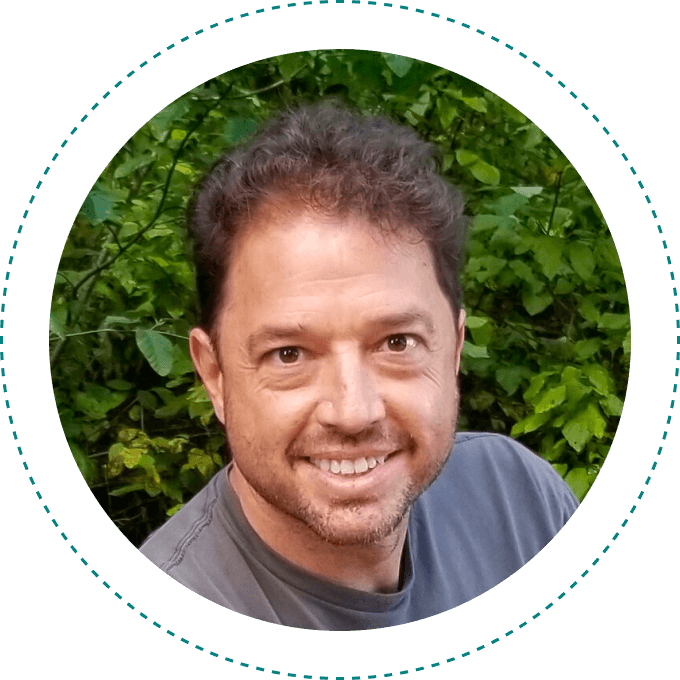
Paul Langfield
Founder and Clinical Director of Cohesive SOULutions
Related Group Therapies

The Ace
Advantage
Do you know what you want to say but worry about hurting someone else’s feelings?

Securing Your Romantic Future
Do you find that you’re so in love but you’re scared to lose this wonderful partner?

Women; It’s Your Time To Shine
Do you find yourself wanting a place to work through issues where the stress is building up

The Emotionally Expanded Man
Do you find yourself wanting a place to hear from other men who just. . . get it?